
Artwork Requirements for All Products
Submit Clean, Usable Artwork
Whenever possible, provide clean, vector artwork in one of the following formats:
 |
 |
 |
If your artwork was created in CorelDRAW, FlexiSign, or another design program, please be sure to export your artwork as a vector PDF before submitting it. Gemini's art processing is primarily done in Adobe software. Because of this we do not accept file types from other software such as .CDR (CorelDraw), .fs (Flexi), or .DWG (AutoCAD).
Note: Vector artwork is required for letters, logos, and other artwork that will be cut, routed, engraved, etched, or otherwise used to create production paths. Bitmap files such as JPEG, PNG, TIF, or BMP will not be accepted for letters or logos.
Bitmap files may be accepted for flat printing purposes only, provided they meet the required resolution and quality standards. All raised print requires vector artwork.
Even if your file is vector artwork, make sure all lines and shapes are clean, smooth, and production-ready. Choppy or jagged lines, especially when they are not part of the intended final design, may require artwork rework, which can result in additional fees or delays while we work to make the file producible.
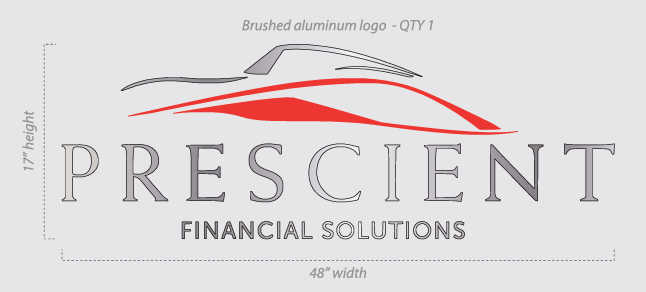
For example, the artwork below is technically vector artwork, but the lines are jagged and uneven. These issues can be difficult to see when viewing the artwork zoomed out, but they can create production problems and require additional artwork work before the order can move forward.
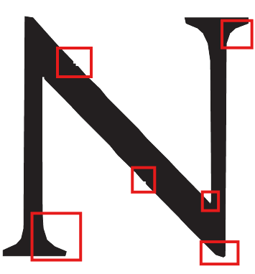
Here are some issues on the "N" from the art above called out in red:
Avoid files that Mix Bitmap Images with Vector Art
Bitmap (or raster) images are made of individual colored pixels, while vector graphics are paths made from mathematical points points connected by line or curve segments.
We cannot use bitmap art for cutting or fabrication purposes, so it should only be included on your art file if it is intended for flat UV Print.
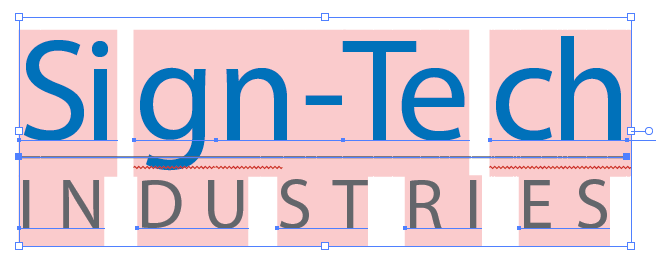
Convert Live Text to Outlines
Converting live text to outlines (curves or shapes) turns editable text into vector artwork, removing the need for font files during printing or sharing. If artwork must be sent with live text, please provide the font name so we can ensure we are producing the text accurately.
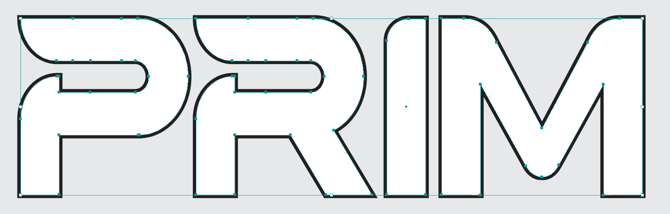
Strokes Should not be used as Outlines
Using live strokes as outlines (instead of expanding them) can cause issues during scaling, double cut lines, or unwanted tiny lines and dots, all of which may unintentionally alter your original design.
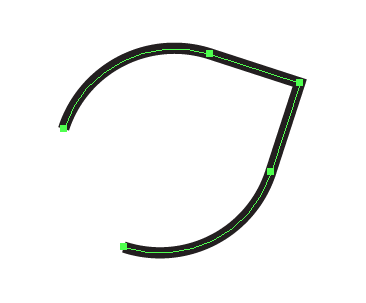
Avoid Open Vector Paths
Our laser cutters, water jet cutters, routers need continuous, closed vector paths to know where to cut the material. If a path is open, the machine may skip the shape, fail to cut completely, or leave the piece stuck inside the material.
 |
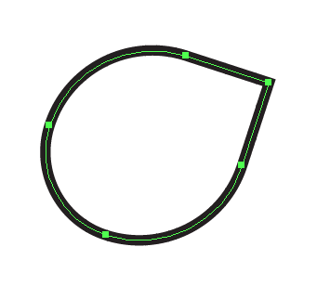 |
| Open Vector Path | Closed Vector Path |
Only Include Artwork Being Produced
Only send the pages and artwork that we need to quote or produce.
For example, if you have a 25-page job file but only need us to quote pages 4, 13, and 14, only send those three pages rather than the entire 25-page file.
For multi-page files, removing pages that are not part of the request helps our team quickly identify the correct artwork and reduces the chance of quoting or producing the wrong design.
Remove Unnecessary Objects on or Outside Artboards
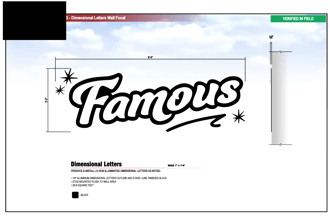
While an showing your company’s logo and other information on your artboard may be helpful for your end user, it can make the quoting and order process more complicated for us. Sending a cluttered artboard can slow down our process and ultimately delay the time it takes to receive your quote or order.
When submitting artwork, please only include the specific artwork that you want quoted or produced. Removing unnecessary artwork, logos, pages, and notes helps us quickly identify what you need and keeps your request moving efficiently.
 |
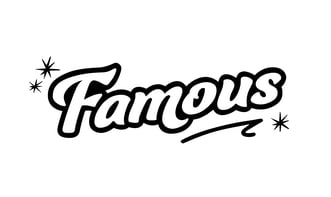 |
| Example of Cluttered Artboard | Example of Clean Artboard |
Do Not Use Clipping Masks
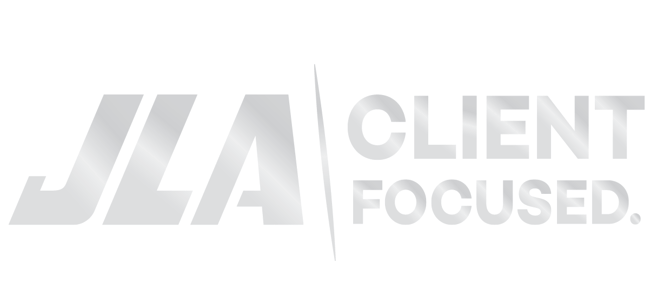
Avoid using clipping masks in submitted artwork. Artwork should be built using clean, editable vector shapes whenever possible.
 |
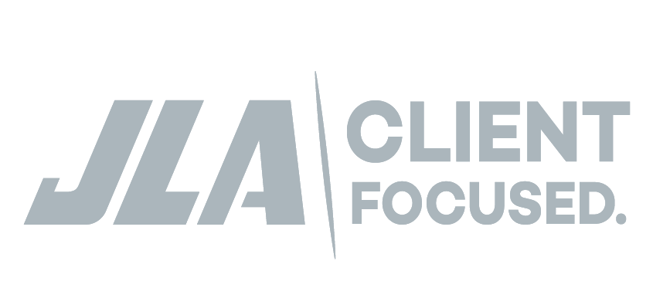 |
| Example of Artwork with Clipping Masks for Metallic Effect | Example of Preferred Artwork with no Clipping Masks |
Provide Artwork at Full Scale
Submit artwork at 1:1 scale whenever possible. If artwork is provided at a different scale, clearly indicate the scale in the file.
Be aware that product-specific minimum letter heights and stroke widths may apply. Artwork that does not meet these requirements may need to be modified during the proofing process to match our product standards.
Want to know if your request will meet our product standards? Ask our Gemini Sign Assistant about the specific product or material you’re interested in. It can help you understand the product standards and requirements before you submit your artwork.
AI-Generated Artwork
AI-generated artwork may be used as a starting reference point, but it is very rarely suitable for production purposes.
If AI-generated artwork contains text, please provide the font name so we can recreate the text accurately. Logos and other graphic elements should be provided as clean vector artwork whenever possible.
Our team will decline AI-generated files if they contain artwork that is physically impossible for us to produce. If a customer cannot provide vector artwork for a logo, our team can review the artwork to determine whether we can recreate it in a format suitable for production, though this will result in additional artwork creation/cleaning charges.
Keep Specifications Out of the Artwork
Include product specifications and special instructions in the quote or order notes rather than placing them inside the artwork file.
This includes information such as:
- Material and finish
- Mounting requirements
- Border selection
- Letter height
- Color requirements
- Border selection - plaque specific
- Special production instructions
Keeping these details separate from the artwork helps reduce confusion and errors during quoting and order entry and prevents delays related to your art.
Show Both Color and Black & White Artwork
When applicable, provide:
- A full-color version showing the intended colors
- A black and white version clearly showing the artwork structure, shapes, details and layers
- For raised and recessed areas on plaques, use black to show raised areas and white to show recessed areas.
This helps our team understand both the visual appearance and how the artwork should be produced.
Raised Print & UV Print Artwork
UV Print and Raised Print have different artwork requirements than products that require letters or logos to be cut, routed, engraved, or etched. Follow these guidelines to help ensure your artwork is ready for production.
Clean Vector Artwork
Clean, smooth vector artwork is required for raised printed text, logos, and graphics and especially for ADA compliant signs.
While bitmap artwork can be used for flat printing, the quality of the final print will depend on the quality of the file provided. Low-resolution or poor-quality artwork may require review by our team before it can be approved for production.
Bitmap Artwork
Bitmap files such as JPG, PNG, TIF, and BMP can be used for UV Print and flat print applications.
For the best results:
- Provide the highest-resolution file available.
- 300 DPI at the intended production size is recommended.
- Avoid screenshots or heavily compressed images.
- Avoid pixelated or blurry artwork.
- Send original image files whenever possible.
If the supplied artwork is low quality, our team may need to review it to determine whether it can produce an acceptable result.
Photographs
For photographs being used in UV Print:
- Send the original, unedited photo whenever possible.
- Send the photo as a separate file from the rest of the artwork.
- High-resolution photos provide the best results.
- If the photo needs to be cropped, show or communicate how you would like it cropped.
The quality of the final print will reflect the quality of the photograph supplied. While we can use low quality photos for printing if requested, the quality of the final product will always be a direct reflection of the original image provided.
Printed Colors
UV Print uses CMYK colors for printing, so printed colors will not match painted colors exactly.
If an exact paint color match is required, masking and painting your design may be a more appropriate alternative. If a printed color needs to match an existing painted color, please be sure to communicate this in your order details so our team can determine the appropriate production method.
Multiple Levels of Raised Print
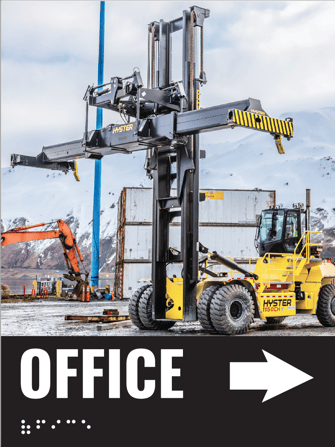
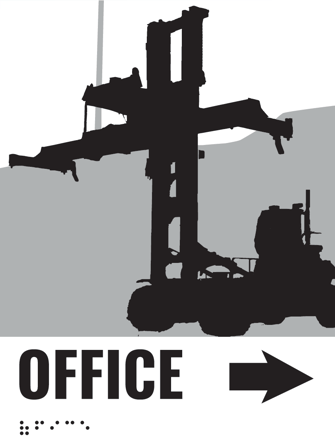
If your design requires multiple levels or depths of Raised Print, artwork should be provided as a grayscale map in addition to your colored art.
Different shades of gray are used to identify the different raised levels, with each shade representing a specific depth. The artwork should clearly show which areas are intended to be raised and to what level. The darker the shade, the more elevated the print will be.
Providing a standard color logo or bitmap image does not give our team enough information to determine which areas should be raised, flat printed, or produced at different depths.
Important: Customers requesting multiple levels of Raised Print should provide the grayscale artwork showing the intended depth of each area. Artwork that does not clearly identify the desired levels may require additional clarification or artwork revisions before the request can move forward.
 |
 |
| Full Color Print |
Grayscale Map Showing Print Levels
|
Braille
If braille is required, all ADA guidelines must be followed. There is no need to specify that the Braille will be raised, as ADA-compliant Braille is always raised. Clearly indicate which text needs to be translated into Braille.
Plaque Artwork Additional Information
Plaque products have additional artwork requirements because the design may be engraved, etched, recessed, raised, or otherwise produced directly into the plaque material.
Plaque Fonts and Minimum Sizes
Minimum letter heights and stroke widths vary by plaque type.
Precision Tooled Plaques
- Most serif fonts should be at least .25" high.
- Most sans serif fonts should be at least .22" high.
- Recessed letters should have a minimum .022" stroke width.
- Kerning should allow at least .022" of space between letters.
- Recessed areas in logos, seals, and other line art should be at least .022" wide.
- Bold, sans serif fonts are generally better suited for recessed copy.
Cast Plaques
- Raised serif fonts such as Times New Roman, Garamond, or Goudy can generally be produced at .25" high.
- Raised sans serif fonts such as Helvetica, Arial, or Futura can generally be produced at .20" high.
- Recessed letters and detail inside logos, seals, and other line art require a minimum .0625" stroke width.
- Kerning should allow at least .022" of space between letters.
Etched Plaques
- Space between letters and logo elements should allow for a minimum .01" stroke width.
- Recessed sans serif letters can generally be produced as small as .125" high.
- Serif fonts generally require a minimum height of .18".
- Raised copy requires a minimum .01" stroke width, including serifs.
Multi-Paint Plaques
For multi-paint plaques, include clear separation between colors in the artwork.
- Two recessed colors cannot touch.
- Two raised colors cannot touch.
- Separation between colors should be at least .0625".
- Clean, smooth vector artwork may allow for improved separation and production results.
- Clearly show the intended color placement in the artwork.
Plaque Portraits
If a photograph will be used for a plaque portrait:
- Send the original photograph separately.
- Use a high-resolution image.
- Avoid screenshots or heavily compressed images.
- Indicate how you would like the photo cropped.
- Do not edit or crop the original photo before sending it.
Our team will make the necessary adjustments to prepare the photograph for production.
Please be aware that plaque portraits are produced through a manufacturing process and will not necessarily reproduce the exact likeness or detail of the original photograph.
Braille
If braille is required, all ADA guidelines must be followed. There is no need to specify that the Braille will be raised, as ADA-compliant Braille is always raised. Clearly indicate which text needs to be translated into Braille.
For Precision Tooled Plaques, artwork should allow approximately .25" of space and account for a minimum of 3/8" of space around the braille.
Plaque Borders
Review the available standard and specialty border options before submitting artwork.
If the desired border is shown in the artwork, make sure it matches the correct border terminology. If it is not shown in the artwork, specify the desired border in the order notes.
Before Submitting Your Artwork
Before sending artwork, confirm that:
- The artwork is customer-approved.
- Artwork is clean and vector, saved as an EPS, AI, or PDF file whenever possible.
-
File does not mix bitmap images with vector art, unless bitmap art is for flat UV print.
-
Live text is converted to outlines, or the font name has been provided.
- Strokes are not used as outlines,
- Artwork does not have open vector paths
- Only artwork being produced is included.
- Artwork is submitted at 1:1 scale or the scale is clearly identified.
- Photos are supplied separately and are high resolution.
- The desired photo crop is identified when applicable.
- Colors and separations are clearly shown.
- Product specifications are included in the quote or order notes.
- The appropriate border is identified for plaque orders.
- AI-generated artwork has been provided with the necessary font and/or vector artwork to recreate the design.
- Artwork does not contain unnecessary clipping masks or unused design versions.
- PDFs are not password-protected.
Following these guidelines to provide the correct artwork up front will help reduce artwork revisions, prevent avoidable delays, and ensure the finished product matches your expectations. Please use the guidelines below when submitting artwork.
6000.17

